

Make the Western Hemisphere Great Again
It is in America's self-interest to sponsor free elections in Venezuela

The Venezuelan who owns an arepa restaurant in my neighbourhood in San Jose, Costa Rica, told me about his former life.
He was, he said, an economist with the Banco Central de Venezuela, responsible for the country’s considerable gold reserves held by the Bank of England, deep under London’s streets.
One day, he was ordered by one of Venezuela’s 2,000 generals to repatriate a portion of the gold and have it moved to the rooftop of a building in Caracas. The bullion was duly returned but the economist, who knew the precise tonnage involved, recommended against transporting the bars in a waiting helicopter, to the general’s chagrin.
He said the knowledge that millions of dollars worth of the nation’s reserves had been pilfered was dangerous information and he fled the country before he became as “disappeared” as the gold.
(The Bank of England still holds 31 tonnes of Venezuelan bullion in its vaults, valued in 2020 at $1.98 billion, but has blocked Caracas from repatriating any more, after the disputed presidential election in that year.)
The economist said that in the early years of the Chavismo revolution, the regime was just incompetent. After President Hugo Chavez’s death in 2013, and the accession of Nicolas Maduro, it became progressively more corrupt and repressive.
A panel appointed by the Organization of American States to investigate possible crimes against humanity, which included former Canadian justice minister Irwin Cotler as one of its three members, concluded there is “ongoing systemic violence orchestrated by the state against civilians” and a deliberate policy to provide impunity to mid-and-high level perpetrators of crimes against humanity.
A long post on social media this week by Jeff Kazin, a former head of trading for American food company Cargill, offered a revealing insight into Venezuela’s descent into lawlessness and hunger. He said that a decade of kleptocracy and bribery made it impossible to operate a business in the country. Cargill’s “minute rice” facility was taken at gunpoint, amid claims the company was gouging the local population. Kazin said after the takeover, the plant did not run again. When it was eventually handed back, all the equipment had been stolen.
He said the government controlled the price of food, subsidizing grocery stores and distorting the market. Access to U.S. dollars to import raw materials was tightly controlled, requiring bribes. When foodstuffs were imported, they were looted at the ports. “Even if you could raise a pig, you couldn’t defend it from being stolen,” he said. “People with guns were hungry”.
This is a country that at the turn of the century had a similar GDP per capita as Poland. Then Poland implemented free market reforms and saw its output per head double to around US$30,000 by last year. In contrast, Venezuela adopted socialism and saw its GDP per capita fall by two-thirds to around US$5,000.
This is the regime that Donald Trump has left in place.
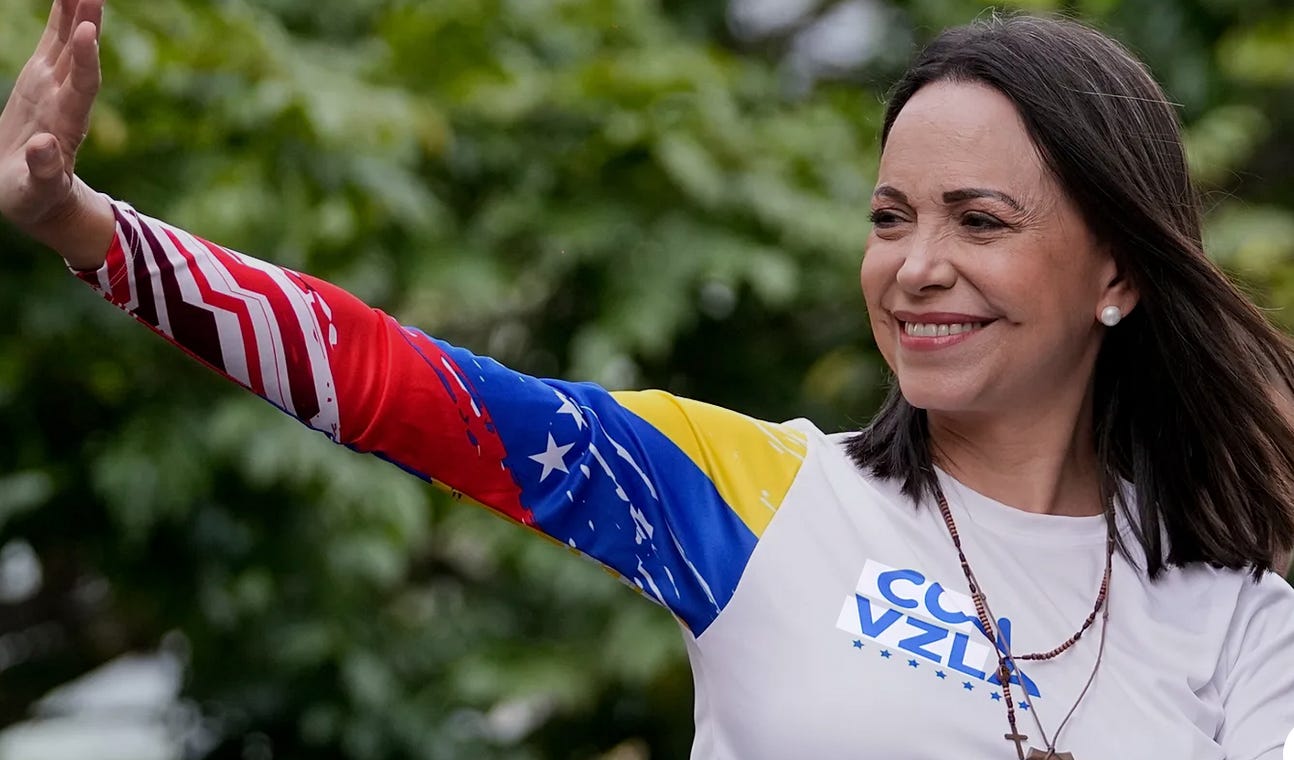
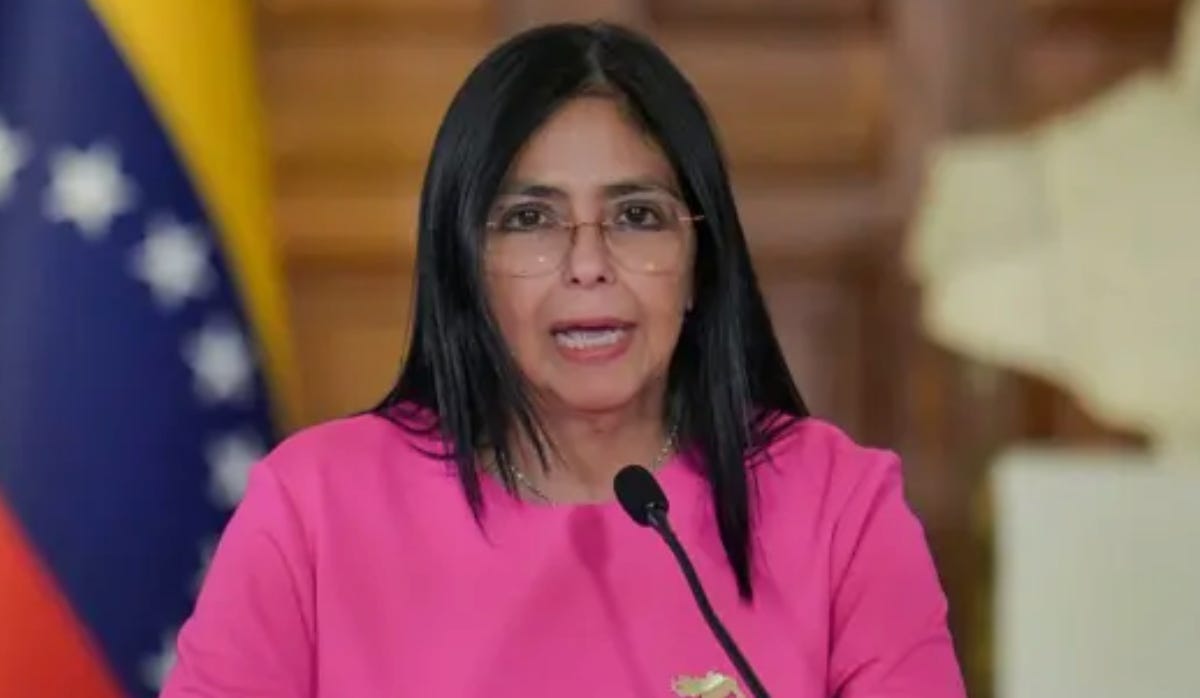
The Americans may have had good reasons for ignoring the legitimate claims of Maria Corina Machado, the Venezuelan opposition leader, in favour of supporting vice-president, Delcy Rodriguez. Officials briefed journalists that trying to install Machado, or Edmundo Gonzales (who was the opposition candidate in 2024 because Machado was banned from running) would have been untenable. Officials said she had no support among the people who held power and installing her would require them to blow up the whole Chavismo system and build a new one from scratch.
That was probably an easy sell to make to Trump, who has proven that he is less than dogmatic about democracy or the rule of law.
On BBC Radio this week, former head of Britain’s MI6, Sir Alex Younger, said the Administration’s approach was likely conditioned by America’s experience in Iraq, where it removed Saddam Hussein’s regime and expected democracy to blossom. “We were hopelessly naive and we paid the price,” he said.
But Venezuela is not Iraq. It has a history of representative democracy going back to 1831, held its first direct elections in 1860 and was a relatively stable democracy from 1958 onwards. During the mid 1970s it was, along with Colombia and Costa Rica, one of three democracies in Latin America. Even Chavez’s revolution was the consequence of free and fair elections that brought him to power in 1998.
Within a decade, it was deemed the least democratic state in South America by The Economist, but autocracy has been the exception, rather than the rule.
Trump’s actions with Operation Absolute Resolve has created an opportunity to act on Washington’s recent National Security Strategy’s for the Western Hemisphere.
It urges the Administration to push out foreign companies that build infrastructure and leverage America’s power to ensure U.S. firms are awarded sole sourced contracts. The plan is to roll back Chinese influence in the region. As the former Cargill executive, Jeff Kazin, pointed out, Venezuela should be an outstanding customer for U.S. grown agricultural products like rice, bread wheat and vegetable oil.
Yet, the way Rodriguez embraced the ambassadors of China, Russia and Iran at her inauguration (and called the U.S. intervention “barbaric”) suggests that whatever she is telling Washington in private, the anti-American, nationalist Chavismo reflex remains deeply embedded.
The alternative is not to become drawn into an Iraqi-style quagmire but to keep the peace for long enough to allow for free elections, which have already demonstrated broad public support for democrats.
There are plenty of international actors who would provide backing for such a police action, not least the Organization of American States, which has long experience in organizing and observing elections. Countries across the region such as Colombia and Peru host millions of displaced Venezuelans and are concerned about the prospect for more refugees.
The Americans still have an aircraft carrier group in the region. They have the hard power to insist that the regime holds elections.
If the Trump Administration truly wants to bolster its appeal to become the economic and security partner of choice, as its National Security Strategy says it does, it has to give the Venezuelan people the chance to sweep away the vestiges of the regime that has been the source of their ruination.
Sound commentary as usual!
And John, one thing you didn’t mention is that much of this has to do with Guyana’s oil, and Maduro’s threat to take it (for China). That offshore oil is far cheaper to produce than the incredibly expensive Orinoco heavy oil. Maracaibo is largely tapped out, and Guyana - possibly with European involvement- looks very good. The Americans don’t really need the oil, but they definitely want to stop China from stealing it