

Canada needs a "wartime mentality" in a disordered world
Former top general says we need to start building our own long-range missiles

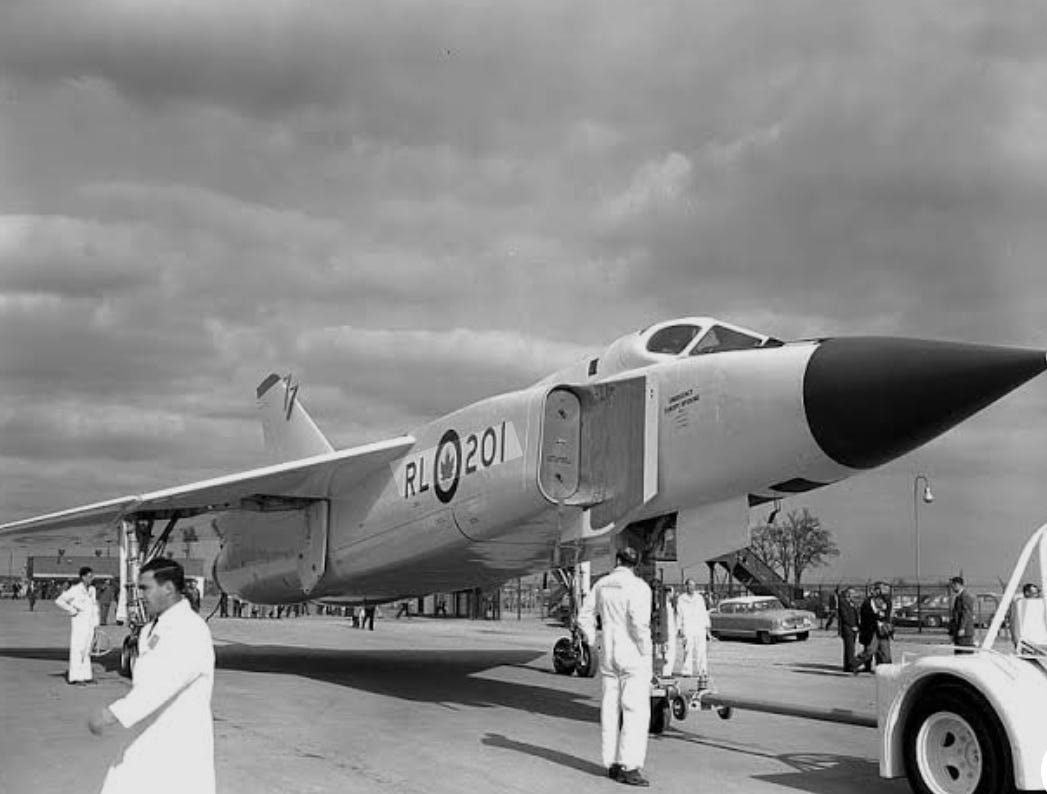
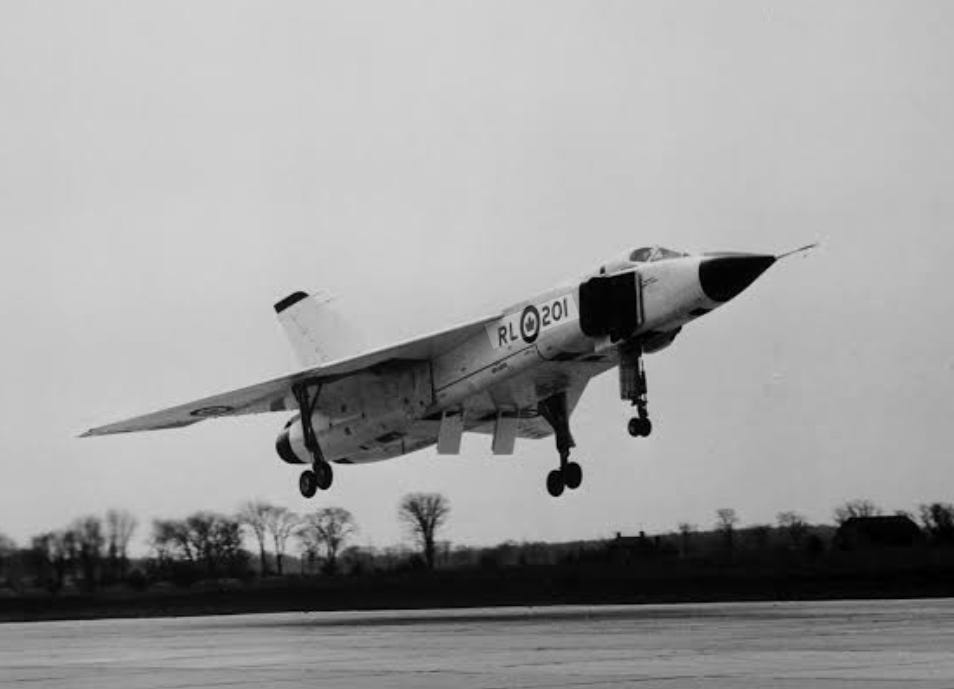
Sixty eight years ago this week, the Avro Arrow interceptor fighter took its maiden flight - arguably the pinnacle of Canadian aeronautical engineering history.
Despite its technical superiority, the Arrow was expensive and was built for a job that wasn’t needed anymore, as missile warfare evolved. By 1959, the Diefenbaker government had cancelled the project and the assembly line was dismantled after producing just five aircraft.
At the time - the height of the Cold War - Canada was spending nearly 5 percent of its economic output on defence.
The peace dividend that followed the fall of the Berlin Wall in 1989 saw that number dwindle to just 1 percent by 2014, but Russia’s invasion of Ukraine, coupled with Donald Trump’s musings about annexing Canada, has created a near consensus where three in four Canadians support more defence spending.
Prime Minister Mark Carney has embraced the need to create a more resilient Canadian Armed Forces as a means of stimulating the wider economy.
He promised that Canada would hit the target of spending 2 percent of GDP on core defence this year, and 3.5 percent by 2035.

On Thursday in Halifax, he declared the first part of that mission has been accomplished through a $60 billion infusion in the past 10 months - largely through pay increases to the Canadian Forces members and planned infrastructure spending on Department of National Defence bases.
The opposition Conservatives said the 2 percent announcement was the result of creative accounting. Defence critic, James Bezan, said it is “an illusion” that has not resulted in increased capabilities for the Forces but was achieved by, for example, adding in the cost of the Canadian Coastguard and veterans’ pensions.
But, the Defence Industrial Strategy the government unveiled in February is not just an accounting trick. This is an infusion of real money that will see annual expenditure on defence rise to $132 billion a year (in today’s dollars) by 2035.
The expectation is it will add 125,000 jobs and increase the Canadian defence industry’s annual revenues by 240 percent.
“We will see the impact of this spending multiply,” Carney said at a press conference in Halifax on Thursday to announce hitting the 2 percent target.
He had better hope it does, because the government’s finances won’t withstand such expenditure unless it starts to generate economic benefits. This is Keynesian prime pumping at its most rudimentary.
Yet, such is the anxiety at the state of the geo-political landscape there is remarkably little push-back.
Canadians saw reports that the Danes sent special forces and blood supplies to Greenland to defend against a possible U.S. invasion and have realized that, while geography continues to make us neighbours with the Americans, the history that made us friends has been distorted beyond recognition.
I wrote this week that the war in the Gulf is likely to impact Canada’s ability to buy surface to air missiles, as future production by manufacturers is commandeered by their host countries to rebuild their stocks. Canada has announced its intent to purchase a ground-based air defence system by 2029 but those plans may be derailed by a global missile shortage.
The U.S. has announced a new America First Arms Transfer strategy that is likely to have implications for Canada’s Defence Industrial Strategy and the plans to wring out maximum benefits in industrial offsets for Canadian producers. The new U.S. strategy is designed to ensure that purchases by foreign governments “build American production and capacity” to support re-industrialization. Canada’s new policy runs directly counter to that idea.
Wayne Eyre, who was Canada’s top soldier as Chief of the Defence Staff until summer 2024, said this country desperately needs its own production lines for many of these munitions. “This includes using our inherent strength in the aerospace industry to produce our own long-range strike and air defence missiles, along with lower cost drones and counter-drone systems,” he said in an interview.
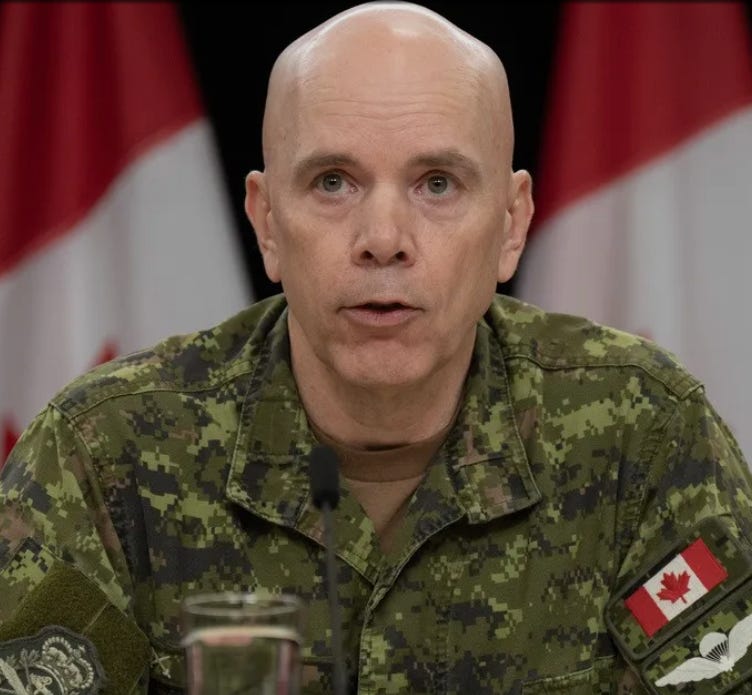
Eyre welcomed the resolve to invest in the defence industry but said “it must be matched with a sense of urgency that comes with a wartime mentality”.
Canada is not currently in the missile business but Eyre’s point is that we have the technical capacity, the financial resources and the political will to think the unthinkable when it comes to confronting the threats in a disordered world.
The real evidence on Canada’s resolve to reduce its reliance on the Americans will come when it finally makes its announcement on the fighter jet replacement program. The Trudeau government announced it would buy 88 F-35A fighters in 2022 but Carney ordered a review of the purchase a year ago.
Ottawa is committed to buying at least 16 F35s but it is entirely possible that it opts for a mixed fleet of fifth generation stealthy F35s and fourth generation Saab Gripens that would be made in Canada and would handle domestic air defence. That would certainly lower the risk of being unable to secure parts and munitions under America’s new arms transfer strategy.
Leaked Defence technical scores revealed last year suggest the F-35 dominated the Gripen in terms of technical and military capability when the two were evaluated head to head.
But Canada may not require all the F35’s capability to protect the homeland.
As General Gregory Guillot, commander of the North American Aerospace Defence Command told the Senate Armed Forces committee last week, NORAD does not need fifth generation fighters to defend the continent. “Their capabilities are better used overseas, where stealth, air-to-ground weapons and penetration capabilities are needed,” he said.
A mixed fleet would appear to be the best solution for Canada’s finances, security and sovereignty.
Unless, of course, we really do think the unthinkable and decide to bring back a 21st century version of the Arrow.
Canada enjoyed great success during WW II at arming itself and developing an efficient and productive defence industry. However, it must be remembered that this success was brought about by the plethora of dollar a day men that were conscripted from private industry and given cart blanche over the federal bureaucracy. This is not likely to happen today. Left to bureaucrats, rebuilding the armed forces will result in what has happened in the past when anything is left to the bureaucracy. Delays, indecision, cost over runs and an inferior result. I have zero faith in having anything of value being decided and managed by our overpaid federal civil service,
Canada needs to start by looking at the Swedish defense strategy in general as a possible model, but specifically, in the air, deploying the Gripen in large numbers would be a good start because of its adaptability to Canada's weather, geography and mission mostly for defense initially, and finally much lower cost. American F-35s are very capable and could serve a more strategic role (because of their stealth, radar and integrated war fighting systems - although the degree to which these are integrated/dependent with US operational ecosystems and maintenance needs to be clearly understood) in fewer numbers alongside unmanned combatants but will likely not operate well in most of the Canadian environment (stealth RAM maintenance, general maintenance complexity vs the Gripen) to be justifiable in large numbers. Cost to operate is also a major consideration.
Canada needs to look at a layered missile defense strategy with an eye to reducing complexity and cost. Working with larger european defense contractors as well as perhaps the likes of Anduril and smaller European defense players would be advised.
But mostly, Canada needs to understand what it's realistic defense posture should be and needs to clearly understand and accept what role the US will play in this picture going forward. Much more independence of Canadian military is probably indicated.